
Virtual Consultation Booking Software for Plastic Surgery
Virtual consultation booking software for plastic surgery has moved from convenience to expectation. Patients researching a procedure increasingly want an...


The latest news and expert insights for aesthetic practices.
Published on: October 8, 2026
Go Back
An AI receptionist for plastic surgery practices and med spas (also called an AI front desk) answers your calls, website chats and Instagram DMs around the clock and books consultations on the spot, instead of sending patients to voicemail. Published pricing for AI answering tools runs from about $0.50 per minute to roughly $150–$1,500 per month, while the median receptionist earns $38,010 a year and can only cover business hours. For a plastic surgery practice or med spa, the right tool is HIPAA-ready (signed BAA), works with your EMR, and hands sensitive conversations to your team.
Key takeaways
Most practices do not have a marketing problem. They have a leak. The ads, SEO and Instagram posts work, the inquiry arrives, and then it sits in voicemail or an inbox. The research on speed is consistent. In a well-known audit published in Harvard Business Review, The Short Life of Online Sales Leads, researchers tested thousands of US companies and found the average first response took 42 hours among those that replied within 30 days. That study is from 2011 and not specific to aesthetics, but the pattern shows up in our field too.
Demand is not the issue. The American Society of Plastic Surgeons reports that 82% of member surgeons saw consultation requests related to GLP-1 use in its 2025 statistics, and adults 66 and older are the fastest-growing group of patients. On the med spa side, AmSpa says medical aesthetics has passed $17 billion in annual revenue and keeps growing by more than a billion a year, and its 2024 report counted 10,488 med spas, up from 8,899. More inquiries and more competitors means the practice that answers first has the advantage.
We tend to blame nights and weekends. In practice, many missed calls happen at 11 a.m., when your front desk is checking in a patient, your coordinator is in a consultation, and the phone rings with nobody free. A standard 40-hour week covers only about 24% of the 168 hours in a week, and even those hours have gaps.
Use this simple formula: missed new-patient calls per month × share that would have booked × consult-to-procedure rate × average procedure value.
Hypothetical example: 120 new-patient calls a month, 25% missed (30 calls). If 30% of those would have booked a consultation (9), and 40% of consultations become procedures (about 3.6) at an average of $6,000, that is roughly $21,600 a month in revenue that never reached your schedule. Replace each number with your own before you decide what a fix is worth.
These terms get mixed together, and vendors use them loosely. Here is how we separate them:
| Tool | What it does | Where it falls short |
|---|---|---|
| Missed-call text-back | Sends an automatic text after a call goes unanswered | Does not qualify the lead or book the consult |
| Live answering service | A person takes a message after hours | Usually cannot book into your calendar; priced per minute |
| AI chatbot | Answers questions and captures details on your website | Does nothing for phone calls or Instagram DMs |
| AI receptionist | Answers calls with a natural voice, handles FAQs, books | Phone only unless paired with chat and DMs |
| AI front desk | Covers calls, website chat and Instagram DMs together, logs every lead in a CRM and follows up | Needs a clean handoff to your team and your EMR |
It helps, and it is the cheapest place to start. The honest limit, which owners raise themselves, is that a text that says sorry we missed you still leaves the patient to start over. It does not ask what procedure they are interested in, answer “how much is lip filler?”, offer a time, or confirm a booking.
An AI front desk goes further by holding the conversation: it picks up the call or replies to the DM, asks qualifying questions, answers common questions with the information you approve, and offers real appointment times. Missed-call text-back can still be one piece of the system, but it should not be the whole plan.
A compliance note on texting. The FCC says consent is required for autodialed, prerecorded or artificial-voice calls and texts to wireless numbers, and must be in writing for telemarketing. Ask any vendor how consent and opt-outs are captured and honored..This is general information, not legal advice, so check your setup with your attorney.
The strongest setup for most practices is a hybrid: AI takes the first touch on everything, and your patient care coordinator spends their time on consultations, complex questions and closing.
| AI front desk | Human front desk only | Live answering service | |
|---|---|---|---|
| Hours covered | 24/7 | About 40 of 168 hours a week | 24/7 |
| Pricing model | Flat monthly fee or per minute | Salary, benefits, training, turnover | Per minute or per message |
| Books into your calendar | Yes, when integrated with your EMR or scheduler | Yes | Usually takes a message |
| Handles several callers at once | Yes | No | Depends on staffing |
| Sensitive or complex conversations | Hands off to your team | Yes | Limited |
| Instagram DMs | Yes, with DM automation | When staff has time | Rarely |
What an AI receptionist for plastic surgery costs depends on volume and on whether you are buying phone only or a full front desk. These are published prices we reviewed in September 2026. Plans change, so check each vendor’s page before you decide.
| Pricing model | Published example | Typical range |
|---|---|---|
| Pay per minute | Accessta lists $0.50 per minute | Scales with call volume |
| Mid-tier AI receptionist | FrontDesk lists $299 and $599 a month by minutes; Jazmine lists a CRM-only plan at $149, then AI plans at $299 and $599 a month | About $150-$600 a month |
| Higher-volume voice receptionist | MedReception lists $495, $995 and $1,495 a month | About $500-$1,500 a month |
For comparison, the Bureau of Labour Statistics puts the median receptionist wage at $18.27 an hour, or $38,010 a year (May 2025). That is before benefits, payroll taxes, training and the cost of turnover, and it buys roughly 40 hours of coverage a week . Ask every vendor about these costs, which often sit outside the headline price:
No AI receptionist for plastic surgery is compliant just because it says so. HIPAA compliance depends on how the vendor handles protected health information (PHI) and on the agreements you sign. HHS guidance on cloud services says a covered entity may use a cloud provider for ePHI only if it has a HIPAA-compliant business associate agreement (BAA) in place, and that a provider cannot avoid business associate status just because it cannot view the data.
Before you sign, ask:
This is the most common worry we hear about an AI receptionist for plastic surgery practices, and it is fair. Owners say they fear coming across as cheap or impersonal. A few practices make the difference:
Most practices already run Nextech, PatientNow, Symplast, Aesthetic Record, Boulevard, Zenoti or a similar system, and they do not want another tool that does not talk to it. Before you choose an AI receptionist for plastic surgery, ask whether bookings are written directly into your calendar, whether lead data syncs both ways, and whether integration costs extra. The most practical approach is an AI layer that sits on top of your existing systems instead of asking you to switch.
A large share of aesthetic inquiries never become phone calls. They arrive as an Instagram DM at 9 p.m. or a contact form on Sunday night. If nobody replies until Monday afternoon, the patient has usually messaged two other practices. When you evaluate tools, check that DMs and website chat are covered, not just the phone line, and that every conversation ends up in one place your team can see.
Cosmasol is an AI front desk built for plastic surgery clinics and med spas. It captures and engages inquiries across calls, website chat and social media DMs, and turns them into booked consultations. Cia, our AI assistant, answers treatment questions, qualifies the inquiry and logs every conversation as a structured lead in the Cosmasol AI CRM, so your team follows up with context instead of starting from scratch. The platform runs on HIPAA-compliant workflows, sits on top of your existing systems, and shows which marketing channels drive revenue.
See how it fits your practice on the features page or book a demo.
It is software that answers patient calls in a natural voice, responds to common questions, qualifies the inquiry and books a consultation, 24/7. Many also cover website chat and Instagram DMs, then pass sensitive or complex conversations to your team.
Published pricing runs from about $0.50 per minute to roughly $150–$1,500 per month, depending on call volume and what is included. Ask about minute caps, setup fees and EMR integration costs.
It is usually worth it when you are losing calls or DMs during busy treatment hours or after closing. Use the missed-call formula above with your own numbers and compare the result to the monthly cost.
It recovers some leads and is a low-cost start. It does not qualify the inquiry, answer questions or book the appointment, so many practices add an AI front desk on top of it.
Yes. It can take multiple calls at the same time, which a single front desk person cannot, and it books or flags a follow-up so no inquiry waits for voicemail.
The best practice is to say so in the greeting. Patients generally respond well when the assistant is helpful, fast and offers a person when needed.
It depends on the vendor. Ask which systems it connects with, whether bookings write directly into your calendar and whether integration is included in the price.
It can handle logistics, such as confirming appointments. Clinical questions and complications should always go to your team. Pricing should be limited to what you approve in advance.
Only if the vendor signs a BAA and meets HIPAA safeguards for storing and handling patient information. Confirm this in writing before launch.
A chatbot covers website chat only. An AI front desk covers calls, website chat and DMs together and records every lead in a CRM with follow-up.
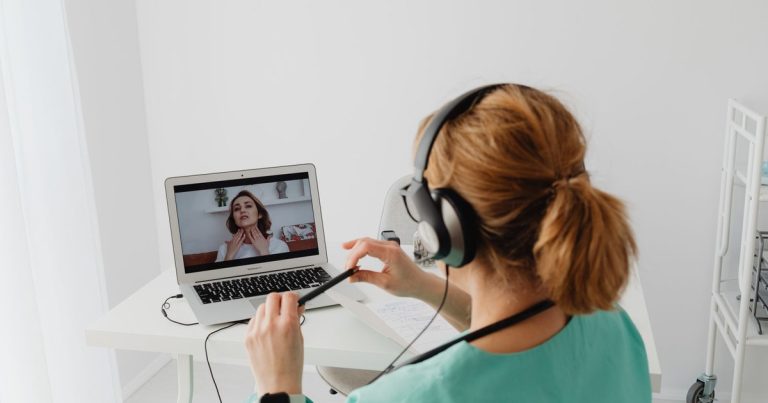
Virtual consultation booking software for plastic surgery has moved from convenience to expectation. Patients researching a procedure increasingly want an...
Software for plastic surgeons is often discussed as though every practice needs the same thing. It does not. A solo...
Plastic surgery software pricing is unusually opaque. Most vendors publish no figures at all, and those that do quote a...