
AI Receptionist for Plastic Surgery & Med Spas: Cost, HIPAA, and What Beats Missed-Call Text-Back (2026 Guide)
An AI receptionist for plastic surgery practices and med spas (also called an AI front desk) answers your calls, website...


The latest news and expert insights for aesthetic practices.
Published on: July 3, 2026
Go Back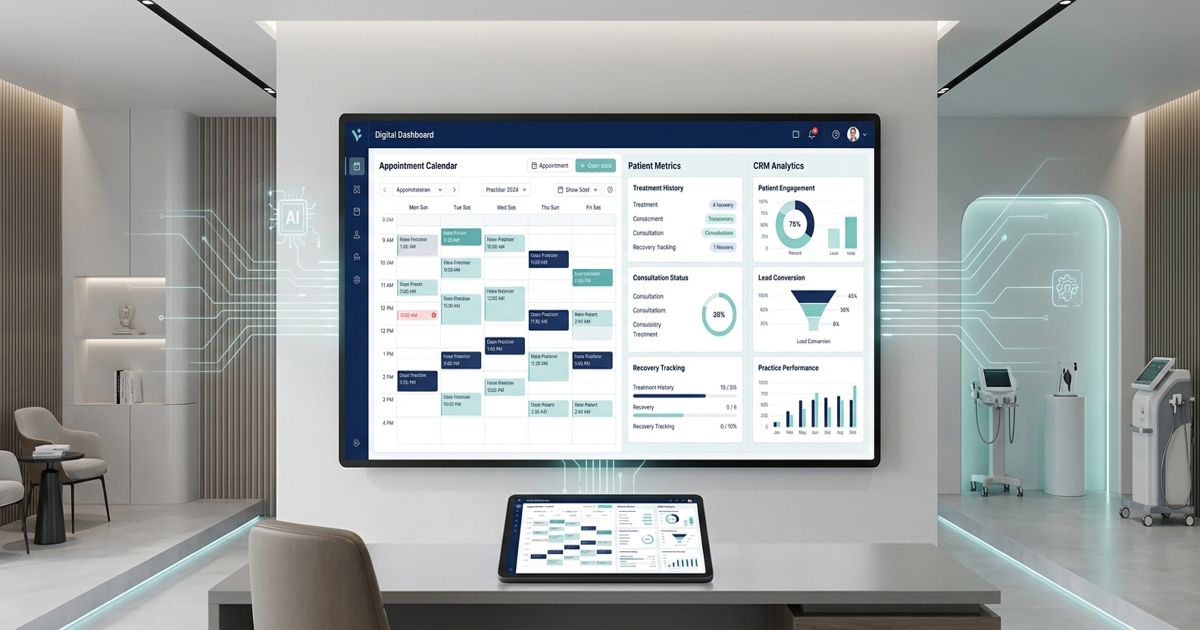
Plastic surgery software has fundamentally changed what practices can accomplish beyond appointment scheduling and patient record storage. Today, clinics compete for patients across multiple digital channels, manage complex communication workflows, and face rising expectations for fast, personalized service. Selecting a platform based only on administrative functions is no longer sufficient. This article outlines the ten capabilities every modern plastic surgery practice software should deliver, helping decision-makers evaluate platforms based on outcomes rather than feature checklists.
The aesthetic industry is growing at a remarkable pace. According to Grand View Research, the global medical spa market continues to expand rapidly, driven by increasing demand for aesthetic procedures and digital patient experiences. Meanwhile, the American Society of Plastic Surgeons reports continued growth in cosmetic procedure demand, highlighting the need for efficient patient management and operational scalability.
This growth creates intense competition among practices. Clinics that rely on disconnected tools for scheduling, records, communication, and billing lose efficiency and patients to competitors using integrated platforms.
Patients researching plastic surgery procedures expect fast responses, seamless digital interactions, and personalized communication from the first inquiry through recovery. A delayed response or fragmented booking experience often means a lost patient. Modern software for plastic surgeons must support the entire patient journey, not just the clinical encounter.
Practice administrators today manage inquiries from multiple channels simultaneously, including phone, email, website forms, and social media. Coordinating consultations, sending reminders, managing consent documentation, and processing payments across separate systems creates significant inefficiency and increases error risk.
According to McKinsey, AI adoption continues to rise across healthcare organizations, with automation improving both operational efficiency and patient engagement. Practices investing in AI-powered plastic surgery practice management software gain measurable advantages in response speed, lead conversion, and staff productivity.
A built-in CRM designed for aesthetic practices is the foundation of effective plastic surgery software. Unlike generic CRM tools, a purpose-built system tracks every patient touchpoint, from the initial inquiry through post-treatment follow-up. It organizes leads by procedure interest, consultation stage, and engagement history, giving practices a clear view of their patient pipeline at all times.
This visibility allows coordinators to prioritize high-intent leads, personalize outreach, and improve consultation conversion rates without increasing manual workload. Integrated CRM functionality eliminates the need for separate spreadsheets or disconnected lead management tools.
Speed is critical in aesthetic patient acquisition. Research consistently shows that responding to a new inquiry within the first few minutes dramatically increases the likelihood of booking a consultation. AI-powered lead capture tools engage website visitors, social media inquiries, and inbound calls instantly, even outside business hours.
An AI receptionist for plastic surgery practices can answer common questions, collect patient information, and schedule consultations automatically. This capability ensures no lead is lost due to slow response times or after-hours unavailability, directly improving conversion rates.
Manual scheduling creates bottlenecks and increases no-show rates. Modern plastic surgery practice software should offer online self-scheduling, automated reminders, and intelligent calendar management that reduces double-bookings and gaps in the schedule.
Automated appointment reminders sent via SMS, email, or WhatsApp have been shown to significantly reduce no-show rates, which directly improves revenue per provider hour. Calendar automation also frees front-desk staff to focus on higher-value patient interactions rather than routine booking tasks.
Electronic medical records are a core requirement of any best plastic surgery software platform. However, the value multiplies when EMR is integrated directly with scheduling, CRM, and billing rather than operating as a standalone system. Staff can access complete patient histories, procedure notes, photos, and treatment records without switching between platforms.
HIPAA-compliant cloud-based EMR also supports remote access, enabling providers to review patient records securely from any location. According to Deloitte, healthcare organizations investing in digital transformation report measurable improvements in workforce productivity and patient experience outcomes.
Plastic surgery procedures require detailed pre-operative and post-operative documentation. Purpose-built software for plastic surgeons should support customizable treatment plan templates, before-and-after photo management, and structured clinical notes that meet both clinical and medico-legal standards.
Digital treatment planning also improves consultation experiences. When coordinators and surgeons can reference visual treatment plans during consultations, patients gain clearer expectations, which improves satisfaction and reduces post-procedure disputes.
Effective patient communication requires reaching patients through their preferred channels. A modern platform should support automated SMS, email, WhatsApp, and voice AI communication for appointment reminders, post-procedure instructions, follow-up care prompts, and reactivation campaigns.
Centralizing all communication within the practice management platform eliminates the need for separate email marketing tools or SMS services. It also creates a complete communication history for each patient, improving continuity of care and reducing misunderstandings between appointments.
Paper consent forms create administrative delays, storage challenges, and compliance risks. Digital consent management integrated within plastic surgery practice management software allows patients to review and sign forms securely before their appointment, reducing check-in time and ensuring documentation is complete before procedures begin.
Secure document storage with role-based access controls ensures that sensitive patient records remain protected while remaining accessible to authorized staff. The American Medical Association highlights that digital health technologies continue to reshape healthcare delivery, with document digitization being a key driver of operational improvement.
Disconnected billing systems create revenue leakage, delayed payments, and reconciliation errors. Integrated billing within the practice management platform connects procedure documentation directly to invoicing, reducing coding errors and accelerating payment collection.
Support for online payment options, installment plans, and automated payment reminders improves collection rates while reducing the administrative burden on front-office staff. Clear financial reporting also helps practice owners monitor revenue trends and identify billing inefficiencies before they affect cash flow.
Data-driven decision-making is a competitive advantage in aesthetic medicine. Modern plastic surgery software should provide real-time dashboards covering key performance indicators including consultation conversion rates, lead source performance, revenue per provider, appointment utilization, and patient retention metrics.
Marketing analytics that track campaign performance and return on investment allow practices to allocate budgets more effectively. Practices that cannot measure marketing ROI often overspend on channels that do not convert while underinvesting in high-performing ones.
As practices grow, their software must scale without requiring a complete platform change. Multi-location support, centralized reporting, and role-based access controls allow growing practices to maintain operational consistency across all clinic sites.
Security and compliance are non-negotiable. HIPAA-compliant data management, encrypted communications, and audit trails protect both patients and practices from data breaches and regulatory penalties. Cloud-based architecture also ensures business continuity and data accessibility regardless of physical location.
When these ten capabilities work together within a single integrated platform, the cumulative impact on practice performance is significant. Practices using comprehensive plastic surgery practice software typically experience:
Practices evaluating platforms should ask the following questions to determine whether a solution meets modern standards:
Platforms that cannot answer these questions clearly are likely to create operational limitations as the practice grows. To understand how a fully integrated solution addresses each of these requirements, book a demo with Cosmasol and see the platform in action.
Many practices start with separate tools for scheduling, EMR, communication, and billing. Over time, the limitations of disconnected systems become costly. Staff spend time switching between platforms, data becomes siloed, and patient experiences suffer from inconsistency.
An integrated platform reduces software complexity by consolidating all practice functions into one system. This approach lowers total operational costs, improves data visibility across departments, and creates a consistent patient experience from first inquiry to post-treatment follow-up.
Practices using unified best plastic surgery software platforms also benefit from better staff adoption, since teams work within a single interface rather than managing multiple logins and workflows. This consistency translates directly into improved productivity and fewer operational errors.
AI will continue to expand beyond lead capture into clinical documentation assistance, scheduling optimization, and predictive patient reactivation. Practices investing in AI-capable platforms today will adapt to these advances more easily than those relying on legacy systems.
Analytics platforms will increasingly identify patients at risk of disengagement before they lapse, enabling proactive outreach that improves retention rates without additional manual effort from staff.
Routine administrative tasks including consent collection, pre-appointment instructions, post-procedure check-ins, and payment reminders will become increasingly automated, freeing clinical and administrative staff to focus on higher-value activities.
The future of plastic surgery practice management software lies in complete patient experience unification, where every interaction from digital inquiry through long-term follow-up care is managed within a single intelligent platform.
Plastic surgery software should be evaluated as a strategic business investment rather than an administrative tool. The right platform integrates CRM, AI-powered communication, EMR, scheduling, billing, and analytics into a unified system that improves patient experiences, reduces operational inefficiency, and supports sustainable practice growth. Practices that invest in comprehensive plastic surgery practice management software today are better positioned to compete, scale, and deliver the exceptional patient experiences that modern aesthetic medicine demands. Ready to see how an integrated platform can transform your practice? Book a demo with Cosmasol and discover what modern plastic surgery software can do for your clinic. You can also contact our team to discuss your specific practice needs.
Plastic surgery software is a specialized practice management platform designed for cosmetic and aesthetic clinics. It typically combines appointment scheduling, EMR, patient CRM, billing, and communication tools into one system. Modern platforms also include AI-powered automation to improve lead capture, patient engagement, and operational efficiency.
The best plastic surgery software should include integrated CRM, AI-powered lead capture, smart scheduling, EMR, treatment documentation, multichannel patient communication, digital consent forms, billing, business analytics, and multi-location management. These capabilities work together to improve patient experience, staff productivity, and practice revenue performance.
Modern plastic surgery practice software improves patient experience by enabling instant responses to inquiries, seamless self-scheduling, personalized communication through SMS, email, and WhatsApp, and digital documentation that reduces paperwork. Patients receive consistent, timely interactions throughout their entire journey, from first contact through post-procedure follow-up care.
General practice management systems are designed for broad medical use and often lack the specialized tools aesthetic clinics need. Purpose-built plastic surgery practice management software includes cosmetic-specific features such as before-and-after photo management, treatment planning, lead conversion tracking, and AI-powered patient communication designed specifically for aesthetic workflows.
Yes. AI improves plastic surgery practice management software by automating lead responses, appointment reminders, follow-up communications, and scheduling. According to McKinsey, AI adoption in healthcare is accelerating, with automation delivering measurable gains in operational efficiency and patient engagement without replacing skilled clinical or administrative staff.
Integrated CRM and EMR systems eliminate the data silos created by disconnected tools. Staff can view complete patient histories, communication records, treatment plans, and billing information from a single platform, improving care continuity and reducing administrative overhead across all clinic workflows. This is central to how Cosmasol’s platform features are designed to support aesthetic practices.
Clinics should evaluate whether the platform offers full integration across CRM, EMR, scheduling, billing, and communication. They should also assess AI automation capabilities, HIPAA compliance, scalability for multi-location growth, and marketing analytics, all of which are areas where Cosmasol’s approach to aesthetic practice technology provides a strong foundation for long-term growth.
Automated reminders sent via SMS, email, or WhatsApp keep appointments top of mind for patients and allow them to easily confirm or reschedule. This proactive communication approach significantly reduces missed appointments, improves schedule utilization, and ensures providers spend their time with patients rather than managing avoidable gaps in their calendars.
Reputable software for plastic surgeons built on cloud infrastructure should include HIPAA-compliant data management, encrypted communications, role-based access controls, and audit trails. These safeguards protect patient data, reduce regulatory risk, and ensure business continuity. Always verify compliance certifications and security protocols before selecting any practice management platform.
Built-in analytics give practice owners real-time visibility into consultation conversion rates, lead source ROI, revenue per provider, and patient retention metrics. This data enables smarter marketing spending, faster identification of operational bottlenecks, and evidence-based decisions that improve both financial performance and long-term scalability for growing aesthetic practices.

An AI receptionist for plastic surgery practices and med spas (also called an AI front desk) answers your calls, website...

Virtual consultation booking software for plastic surgery has moved from convenience to expectation. Patients researching a procedure increasingly want an...

Software for plastic surgeons is often discussed as though every practice needs the same thing. It does not. A solo...