
Evaluating Cosmetic Surgery Software: Lessons from High-Performing Practices
Cosmetic surgery software is no longer just an administrative convenience. It has become a core driver of practice performance, influencing...


The latest news and expert insights for aesthetic practices.
Published on: June 18, 2026
Go Back
Cosmetic surgery software is no longer a luxury for large practices. It has become the operational foundation that separates high-performing aesthetic clinics from those struggling to keep up. According to Grand View Research, the global healthcare CRM market is projected to reach over $28 billion by 2030. It reflects the rapid adoption of intelligent practice tools across medical specialties. Clinics investing in the right cosmetic clinic software are already seeing measurable gains in patient retention, consultation conversion, and staff efficiency.
This blog walks through five clear signs that smart aesthetic clinics are leveraging cosmetic surgery practice management software to operate smarter, not harder.
Missing a patient inquiry is one of the most common and costly problems for cosmetic clinics. A prospective patient who calls after hours and reaches no one will simply move on to the next clinic.
Smart clinics using cosmetic surgery software deploy an AI call agent that answers every inbound call, qualifies the lead, and schedules consultations automatically. This AI receptionist does not take breaks, does not miss calls, and logs every interaction directly into the patient record.
For cosmetic surgery software for high-volume clinics, this capability is not optional. It is essential. A single missed call during peak hours could mean a lost high-value procedure.
Platforms like CosmaSol integrate AI calling natively into the practice workflow. This allows front-desk teams to focus on in-clinic experiences while the system handles inbound communication autonomously. This is one of the clearest signs that a clinic is operating at a modern, competitive standard. Learn how plastic surgery software improves AI calling outcomes for clinics managing high inquiry volumes.
AI call agents integrated into cosmetic surgery practice software are programmed with clinic-specific responses, treatment details, and booking logic. When a patient calls, the agent greets them, answers common questions, confirms availability, and schedules the consultation. All call data is stored in the cosmetic surgery EMR system for seamless follow-up by the clinical team.
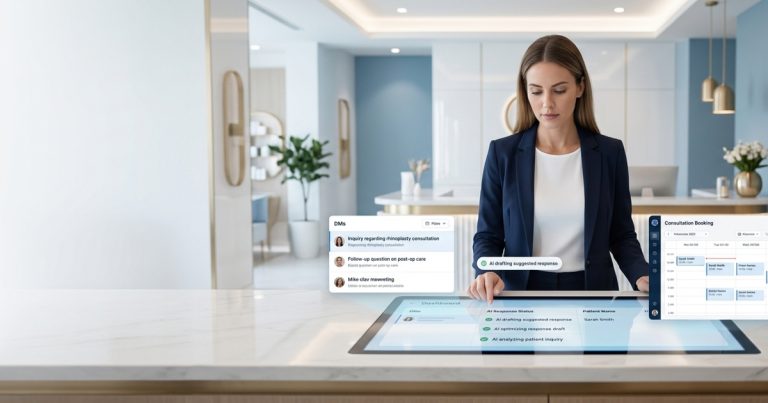
Aesthetic clinics live on visual platforms. Instagram and Facebook generate a significant volume of patient inquiries through direct messages and comments. However, most clinics do not have the bandwidth to respond to every DM promptly.
A social media agent built into the clinic’s cosmetic surgery practice management software automates this process entirely. It monitors incoming messages, responds with personalized replies, captures lead information, and routes serious inquiries to the booking system. This closes the gap between social engagement and actual consultations booked.
Research from McKinsey indicates that companies responding to customer inquiries within an hour are significantly more likely to convert those leads. A social media agent enables clinics to operate at that speed, around the clock.
Clinics using software for plastic surgeons with built-in social media automation are converting followers into consultations at a rate that manual processes simply cannot match.
A clinic that still relies on paper charts or disconnected digital tools is losing time on every patient interaction. Cosmetic surgery electronic medical records software gives providers instant access to complete patient histories, treatment notes, photos, consent forms, and follow-up schedules.
Smart clinics using a dedicated cosmetic surgery EMR system report significantly faster consultation preparation. Providers can review before and after images, document outcomes, and track treatment plans from any device without searching through physical files.
This is especially important for cosmetic surgery software for patient management and consultation tracking. When a patient books a follow-up, the provider already has everything needed before the appointment begins. That level of readiness builds trust and shortens visit times.
CosmaSol’s EMR functionality is built specifically for cosmetic workflows, meaning it captures the details that matter in aesthetic care, not generic clinical data fields that do not apply. Explore how AI cosmetic clinic software streamlines documentation and reduces administrative burden.
Running paid ads, managing social content, and coordinating email campaigns without knowing what is working is a costly guessing game. Smart aesthetic clinics use cosmetic surgery practice software that tracks every marketing channel and ties it back to booked consultations and completed procedures.
This level of visibility allows clinic owners and marketing managers to make data-driven decisions. Which campaign drove the most consultations last month? Which channel produces the highest-converting leads? These answers are available in real time within a unified dashboard.
Software for plastic surgeons with marketing analytics built in removes the need for separate tools like spreadsheets or third-party analytics platforms. Everything lives in one system, and the data is always current.
For clinics running cosmetic surgery software for high-volume clinics, this insight is critical. When you are managing dozens of campaigns across multiple channels, a centralized analytics view prevents budget waste and sharpens targeting strategy.
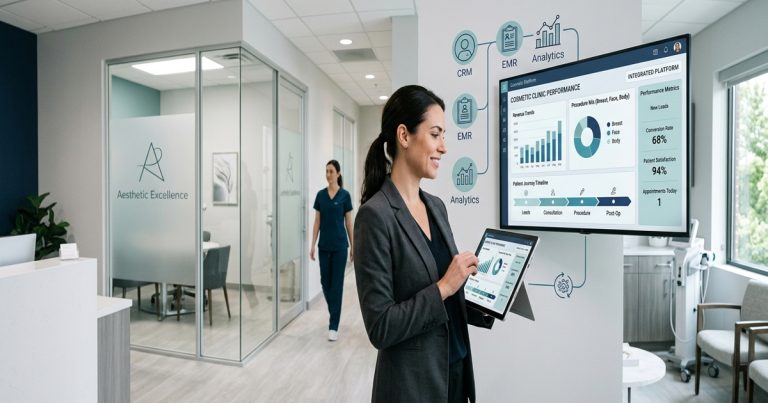
Perhaps the most telling sign of a smart aesthetic clinic is what its technology stack looks like. Disconnected tools create data silos, staff confusion, and missed follow-ups. A clinic using five separate platforms for scheduling, billing, EMR, CRM, and marketing is working against itself.
A unified cosmetic surgery practice management software platform brings all of these functions into one system. Staff log in once and access everything. Patient data flows automatically between departments. No duplicate entry. No missed handoffs.
This integration is particularly valuable for cosmetic surgery practice software deployments across multi-location clinics. When all locations share the same platform, reporting becomes consistent, and management becomes scalable.
CosmaSol is built as this unified system. EMR, CRM, AI call agent, social media agent, appointment scheduling, billing, and marketing analytics are all native to the platform. Clinics do not need to integrate third-party tools or manage vendor relationships for each function separately. Discover how plastic surgery software supports multi-clinic management through centralized operations.
The five signs above reflect a clear pattern. Smart aesthetic clinics have replaced fragmented workflows with integrated cosmetic surgery software that handles communication, documentation, marketing, and patient management in one place. The result is not just operational efficiency. It is a measurably better patient experience and a more competitive practice.
If your clinic is still relying on manual processes, disconnected tools, or reactive lead handling, it may be time to evaluate whether your current systems are holding you back. The gap between high-performing and average-performing clinics often comes down to the quality of the software behind the scenes.
Explore how AI CRM and lead management for aesthetic clinics can transform how your practice handles every inquiry from first contact to completed consultation.
Cosmetic surgery software is the defining factor that separates operationally mature clinics from those still relying on outdated workflows. From AI call agents and social media automation to integrated EMR and marketing analytics, the five signs explored in this blog represent a clear benchmark for modern practice management. Clinics that adopt cosmetic surgery practice management software built for the aesthetics industry are better positioned to grow, retain patients, and compete effectively. If your practice is ready to close these gaps, discover how CosmaSol helps aesthetic clinics boost conversions with a unified platform designed specifically for this purpose.
Cosmetic surgery software is a practice management platform that combines EMR, scheduling, billing, CRM, and marketing tools in one system. It helps aesthetic clinics manage patient records, automate communication, and track performance. Modern platforms like CosmaSol also include AI calling and social media automation.
Cosmetic surgery software for patient management and consultation tracking keeps complete records of every patient interaction, from initial inquiry to post-procedure follow-up. It logs consultation notes, treatment photos, consent forms, and booking history, giving providers full context before every appointment and reducing preparation time significantly.
An AI call agent is an automated system within cosmetic clinic software that answers inbound calls, responds to patient inquiries, and books consultations without human involvement. It operates around the clock, ensuring no lead is missed and every interaction is logged in the patient record automatically.
A social media agent monitors platforms like Instagram and Facebook for incoming messages and comments. It responds automatically, qualifies patient intent, and routes serious inquiries to the booking system. This ensures no DM goes unanswered and converts social engagement into scheduled consultations efficiently.
Most purpose-built cosmetic surgery electronic medical records software platforms are designed with HIPAA compliance in mind. They use encrypted data storage, role-based access controls, and audit trails to protect patient information. Always verify compliance certifications with your software provider, since HIPAA-compliant medical spa software standards provide a strong reference benchmark for aesthetic practices.
A strong cosmetic surgery EMR system should support before and after photo management, treatment plan documentation, consent form storage, and seamless integration with scheduling and billing tools. It should also support cloud access so providers can review records securely from any device at any time.
Yes. Cosmetic surgery software for high-volume clinics with multi-location support centralizes data across all sites. Staff at each location access the same platform, and management gets a unified reporting view, eliminating the data silos that cloud-based plastic surgery software benefits are specifically designed to address.
Software for plastic surgeons is built around cosmetic workflows, including procedure-specific templates, visual documentation tools, and lead conversion tracking. General medical software often lacks these features. Aesthetic-specific platforms also integrate marketing analytics and patient communication tools that are not typically found in standard clinical systems.
Cosmetic surgery practice software reduces no-shows through automated appointment reminders sent via SMS and email. It also enables easy rescheduling through patient-facing portals, reducing cancellations. Some platforms use AI to identify high-risk appointments and trigger personalized follow-up messages to confirm attendance before the scheduled date.
Cosmetic surgery practice management software goes far beyond scheduling. It integrates EMR, billing, CRM, marketing analytics, AI automation, and patient communication into a single platform. A basic scheduling tool handles appointments only. Practice management software connects every part of the patient journey from first contact through post-procedure care.
Cosmetic surgery software is no longer just an administrative convenience. It has become a core driver of practice performance, influencing...

Best marketing software for cosmetic surgeons does far more than count website clicks or social media followers. Many practices pour...
Cosmetic surgery software is reshaping how aesthetic clinics capture, manage, and convert social media leads. Every day, potential patients send...