
Plastic Surgery EMR Software: How to Choose a Platform That Scales with Your Practice
Plastic surgery EMR software should scale with your practice. Discover key features, integration criteria, and evaluation tips to choose the...


The latest news and expert insights for aesthetic practices.
Published on: August 18, 2026
Go Back
Replacing a plastic surgery EMR system is the change practices delay longest. The fear is reasonable. Clinical history, consent records and before and after imaging represent years of work and carry real medico legal weight. Done carelessly, a migration loses some of it permanently. Done properly, it is routine. This guide sets out what actually moves, what does not, and how to prove nothing was lost.
Not all data is equally valuable, and treating it as though it is makes migration slower and considerably more expensive than it needs to be.
Patient demographics almost always migrate in full. They are structured, small and essential. Active clinical records for patients seen recently should also move completely. Historic records for patients last seen many years ago are a different question, and a read only archive is frequently the right answer.
Financial history follows the same logic. Open balances and deposit liabilities must migrate because they are live obligations. Settled invoices from previous years usually do not need to sit inside the new plastic surgery EMR system, provided they remain retrievable if a query arises later.
Appointment history is the category most often forgotten. Past and future bookings both matter, but for different reasons. Future appointments must migrate completely or patients will arrive to find no record of them. Historic attendance data is useful for reporting but rarely worth the migration cost, so most practices move forward bookings into the new plastic surgery EMR system and archive the rest.
Write these decisions down before requesting quotes, because migration scope is the single largest variable in the price you will be offered. Two vendors quoting very different figures are often pricing very different amounts of work, and without a written scope you cannot tell which. A clear scope also protects you later, when someone asks why a record from six years ago is not immediately visible on screen.
Involve clinicians in this decision rather than delegating it to whoever manages the project. Only the people using the records daily can say which historic information genuinely informs current care. Administrators tend to migrate everything to be safe, which inflates cost, while project managers tend to migrate too little. A short review with two or three clinicians usually produces a scope for the new plastic surgery EMR system that is both affordable and clinically sufficient.
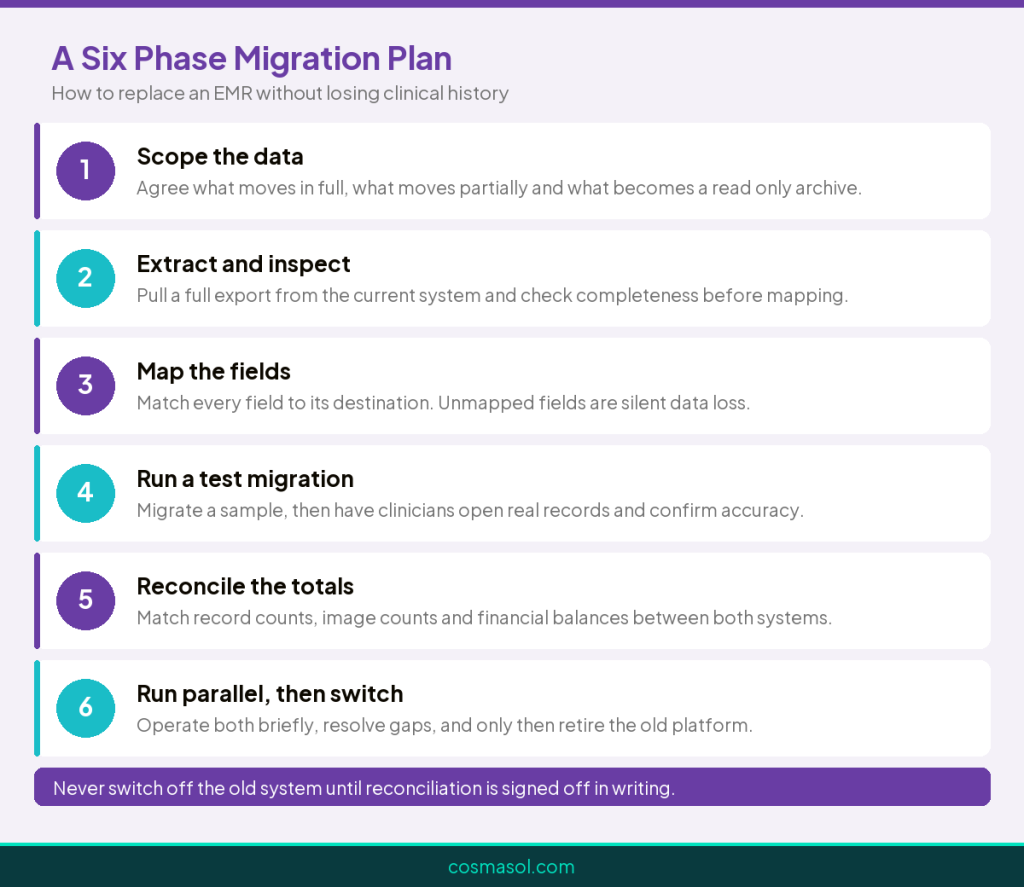
Six phase plan for migrating a plastic surgery EMR system without data loss
Structured data moves reasonably well between systems. Clinical photography and consent records are harder, and they are exactly the assets an aesthetic practice can least afford to lose.
Images are often stored outside the main database, sometimes in folders with inconsistent naming conventions built up over years. Migration must preserve the link between each image and the patient, the date and the procedure. An image that arrives without that context has limited evidentiary value and may as well not have moved.
Consent records carry similar risk. A consent form matters because it is tied to a specific procedure discussed on a specific date, in a specific version of wording. Flattening consent history into undated documents destroys most of its protective value at precisely the moment you would need it.
Ask each vendor directly how image metadata and consent versioning transfer between platforms, and require the answer in writing rather than as a verbal assurance. Then test it. During the sample migration, open a patient with several imaging sessions across different procedures and confirm every set is correctly attributed. This single check catches more problems than any other step in a plastic surgery EMR system migration.
Storage volume is worth confirming early as well. A busy aesthetic practice accumulates a surprising quantity of high resolution imaging, and transferring it takes longer than most project plans assume. Ask the receiving plastic surgery EMR system what storage is included, what additional capacity costs, and how long the image transfer itself will take, because that step frequently determines the go live date rather than the structured data work.
The most common migration failure is not a technical fault. It is switching off the old system before proving the new one is complete.
Reconciliation needs to be quantitative rather than impressionistic. Count patient records in both systems and match the totals exactly. Count images and compare. Sum open balances and deposit liabilities in both and confirm they agree to the penny. Then have clinicians open a sample of real records and confirm the content reads correctly, because a record can migrate technically while being unusable in practice.
Assign the sign off to a named person. Migrations that fail rarely do so because nobody checked. They fail because everybody assumed somebody else had checked, and the old system was decommissioned on schedule regardless.
Keep the old platform accessible in read only form for an agreed period after go live. Retention duties continue regardless of which system you use, and the NIST implementation guidance for the HIPAA Security Rule is a practical reference for how access and audit controls should apply to archived clinical data.
Budget for the overlap period explicitly. Running the outgoing platform alongside the new plastic surgery EMR system for three to six months costs money, and practices that fail to plan for it face pressure to decommission early. That pressure is exactly what causes irreversible mistakes, so treat the overlap licence as part of the migration cost rather than as an avoidable extra.
Some practices discover during migration that their data is harder to retrieve than expected. That is a contractual problem as much as a technical one, and it is usually discovered too late.
Ask the outgoing vendor for a full structured export early, and be specific about the format you require. Request the data dictionary alongside it, because a field named without explanation is a field that will be mapped incorrectly by whoever handles the import.
Where an export is refused or priced unreasonably, national policy on information blocking sets out expectations about access to electronic health information. Raising this early, politely and in writing tends to resolve most disputes quickly.
Interoperability standards make this easier than it used to be. The programme for certified health IT defines how systems should exchange data, and asking whether both platforms follow those standards is a fair question during procurement. It is also a useful signal, since a vendor building on open standards is generally less interested in making departure difficult.
A migration succeeds or fails on the days either side of go live, not on the data transfer itself.
Choose a quiet period rather than a busy surgical week. Run both systems in parallel briefly so problems surface while a fallback still exists. Train staff on their own workflows rather than generic modules, and identify one person per team who becomes the internal expert. Expect a temporary dip in throughput for two to three weeks and plan clinic capacity accordingly.
Communicate with patients as well. Appointment confirmations may look different, payment links may change, and a brief note explaining this prevents a wave of confused calls during the weeks when your team has least capacity to answer them.
The deployment model affects the effort involved. Moving to a cloud based plastic surgery EMR removes server maintenance and simplifies multi site access, which our guide to cloud based platform benefits explains in more detail. If you are still selecting a destination platform, our guide to choosing an EMR that scales covers the criteria that matter most.
Replacing a plastic surgery EMR system is a project, not an event. Scope the data honestly, protect images and consent records above everything else, and reconcile the numbers before the old platform is retired. Practices that follow that sequence rarely lose anything of value. If you are planning a migration this year, book a Cosmasol demo and ask specifically about the data migration process.
Most practices plan six to twelve weeks from initial scoping through to go live. Migration scope drives the timeline considerably more than practice size does, particularly where clinical images and years of historic financial records are involved in the move.
Not if the project is scoped and reconciled properly. Losses happen when fields are left unmapped, or when the old system is retired before record counts and financial totals have been formally matched and signed off by a named person.
They should migrate with their metadata intact, preserving the link to patient, date and procedure. Confirm this in writing before signing, because images stored outside the main database are frequently handled poorly during a migration and lose their context.
It depends on record age and access frequency. Active patients should move in full. Long inactive records are often better kept in a read only archive that remains searchable if a clinical or legal query arises some years later.
Access to electronic health information is governed by information blocking policy. Ask for a full structured export and the accompanying data dictionary early in the process, and escalate promptly in writing if the request is obstructed or unreasonably priced.
A short parallel period is strongly advisable. It lets problems surface while a fallback still exists, and it gives staff a safety net during the first difficult weeks of working with unfamiliar screens and rebuilt daily workflows.
Match patient record counts, image counts and financial balances across both systems, then have clinicians review a sample of real records for usability. Assign the sign off to a named person before anything at all is switched off.
The underlying data work is broadly similar, but cloud removes ongoing server maintenance and simplifies access across sites. Confirm hosting location and access controls in writing beforehand if you have specific data residency obligations to satisfy.
Unmapped fields, unclear image storage and skipped reconciliation cause the overwhelming majority. All three are avoidable with a test migration and a written scope agreed before the contract is signed rather than negotiated afterwards under time pressure.
The frequently asked questions page covers deployment and support arrangements in detail, and the contact page reaches the team directly for questions specific to your own practice and its history.
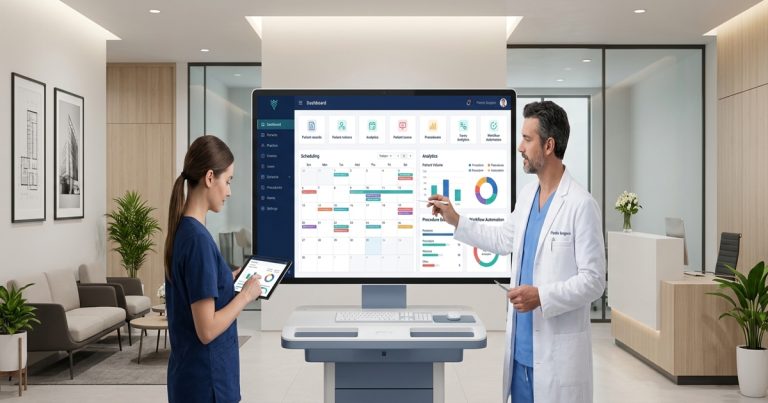
Plastic surgery EMR software should scale with your practice. Discover key features, integration criteria, and evaluation tips to choose the...
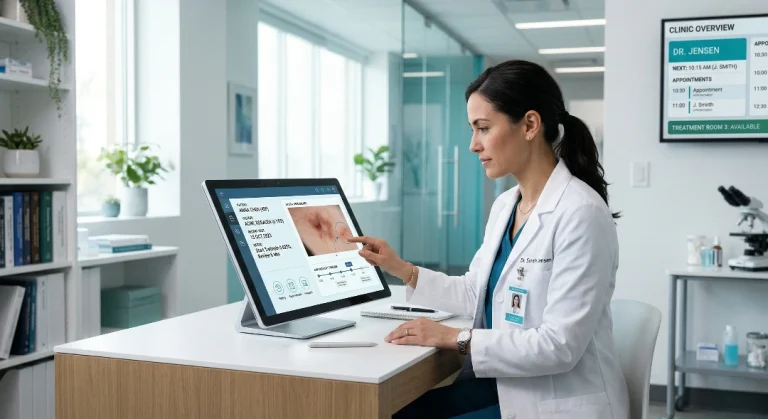
Introduction Dermatology EMR software is reshaping how aesthetic and cosmetic clinics deliver care. Outdated paper charts and disconnected systems slow...
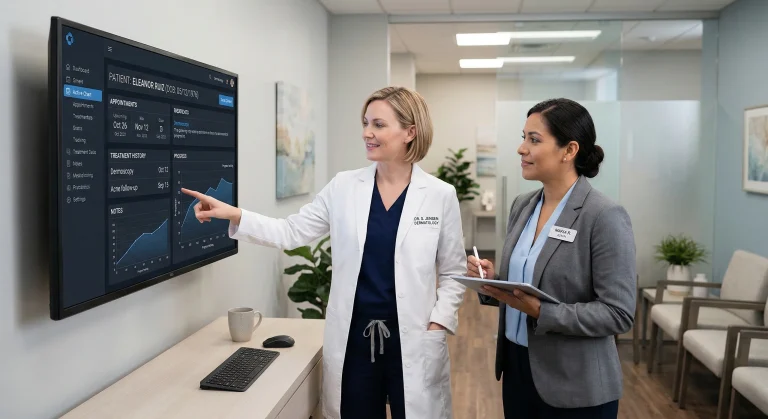
Selecting the right EMR software companies for dermatology is one of the most consequential decisions a clinic can make. The...